

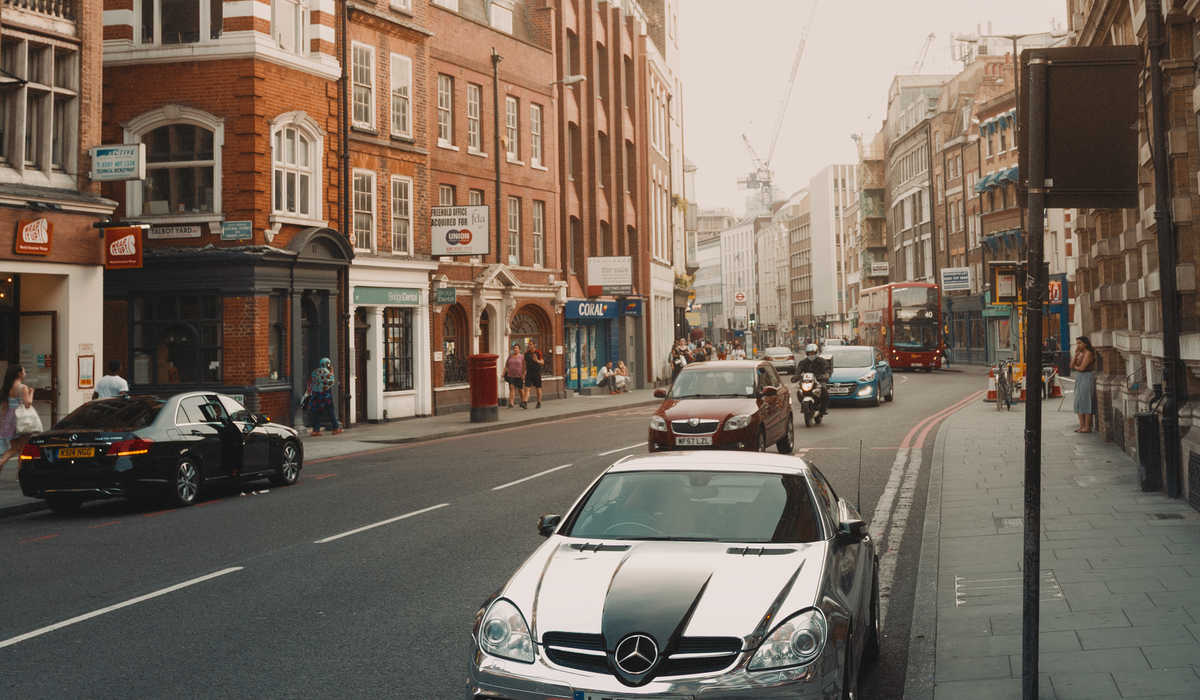
Start with your real daily mileage, not your dream mileage
Before you fall in love with a shape or a badge, spend a week noting every journey you actually make. Most London drivers are surprised by the result. If your week is largely school runs, supermarket trips and the occasional evening out, you may be covering fewer than 60 miles in total. That changes everything about which car suits you.
Short, stop-start journeys are the hardest kind of driving a car can do. The engine never fully warms up, the battery never fully recharges, and the exhaust system collects condensation that never burns off. A diesel is a poor choice for this pattern, because particulate filters clog when they never get a decent run at motorway speed. A petrol or a self-charging hybrid copes far better with the grind of 20mph zones and traffic lights.
If, on the other hand, you regularly drive out to see family in the Midlands or take the M4 west for work, your mileage profile is completely different. Be honest about it. Buying for the twice-yearly long trip and then driving it 12,000 short urban miles a year is how people end up with the wrong car and a hefty repair bill.
Where will the car actually live?
Parking is the single most underrated factor in London car ownership, and it should shape your shortlist before you look at anything else.
- On-street only. Check whether your borough operates a residents' permit scheme, what it costs, and how long the waiting list is. Some streets have far more permits than spaces.
- Width and length. Measure your bay or driveway properly. A car that is 20cm wider than your space is a daily source of scratched alloys and frayed nerves.
- Restrictions and barriers. Width restrictions, height barriers and narrow Victorian streets rule out larger SUVs and vans for many households.
- Safety on the street. If the car sits outside overnight, folding mirrors, a decent alarm and a reversing camera matter more than you might think.
As a rough rule, if you park on the street in inner London, a compact hatchback or a small estate will make your life noticeably easier than anything larger.
Work out the true cost of running it
The purchase price is only the beginning, and in London the running costs can dwarf it. Build a realistic annual figure before you commit, and include the following.
- Insurance. London postcodes push premiums up sharply. Check the insurance group of any car you are considering, and get a quote on the exact model and trim before you buy it, not after.
- Emission zone charges. Confirm the car meets current London emissions standards. A cheap older diesel can cost you a daily charge that quickly exceeds the car's value.
- Vehicle tax and MOT. Small annual costs, but they add up, and an older car will need more attention at test time.
- Fuel and charging. Work out your likely weekly spend, not the brochure figure.
- Tyres, servicing and wear. Urban driving is brutal on brakes, clutches and tyres. Budget for these as certainties, not surprises.
Set a monthly ceiling and treat it as a hard limit. If a car only works financially when nothing ever goes wrong, it does not work.
Match the car to your household
A car has to fit the people and the things you carry, not just the driver. Think through a typical week rather than a best-case one.
If you have young children, look for easy Isofix anchor points, rear doors that open wide in a tight space, and a boot that swallows a folded pushchair without a wrestling match. If you regularly carry adults in the back, legroom and headroom matter more than a stylish roofline. If weekends involve bikes, camping gear or a dog, a hatchback with a high load lip will frustrate you, while a small estate or a practical MPV will quietly earn its keep.
Also consider what you do not need. A seven-seater used twice a year is an expensive way to solve a problem that a hire car or a train ticket solves far more cheaply.
Petrol, hybrid, diesel or electric?
For most Londoners, a petrol or hybrid is the sensible default. Petrol engines tolerate short journeys reasonably well, are cheap to service and are widely available in small, easy-to-park body shapes. A hybrid adds smoothness in traffic and can noticeably cut fuel use on stop-start routes.
Diesel still makes sense if you genuinely cover long motorway miles and the car has a solid service history. For everyone else, the filter and emissions-zone headaches outweigh the fuel savings.
Electric is increasingly practical, but only if you can charge at home or have a reliable local charging point. If you rely entirely on public charging and park on the street, factor in the time and cost honestly. For low-mileage urban drivers who can charge overnight, though, an electric car can be genuinely cheap and pleasant to run.
Buying and looking after it once it is yours
When you find a candidate, do not skip the boring checks. Ask for a full service history, verify the mileage, and check the MOT record for advisories and repeated failures, which often reveal a car that has been neglected rather than loved. A professional pre-purchase inspection costs a modest amount and can save you thousands.
Once it is on your driveway, keep it healthy with a simple routine. Check tyre pressures and tread monthly, top up fluids, and get the car serviced at the intervals the manufacturer specifies rather than stretching them. Wash it regularly through winter, because road salt and urban grime accelerate rust. And take it for a proper run out of town every few weeks, which clears condensation, exercises the brakes and keeps the battery in better shape.
Choose for the life you lead, budget for the costs you will actually face, and look after the car properly. Do those three things and your next purchase will feel less like a gamble and more like a good decision.






John Doe
14 January, 2022Having no content in post should have adverse..
Chauffina Carr
10 April, 2022We use these tests all time! Killer stuff!
Jim Séchen
16 July, 2022Thanks for all the comments, everyone!